ドアの外に出て、芝生と庭を見回してください。おそらく、いくつかの一般的な雑草が見られるでしょう。
もう一度見てください。また、あなたを悩ませている発疹を和らげるために、夕食や湿布の材料に目を向けているかもしれません。
雑草は、すぐに引き抜かれたり、毒を盛られたりする厄介な存在として無視されがちです。
しかし、多くの雑草は食用であるだけでなく、薬用でもあり、健康を改善することができます。
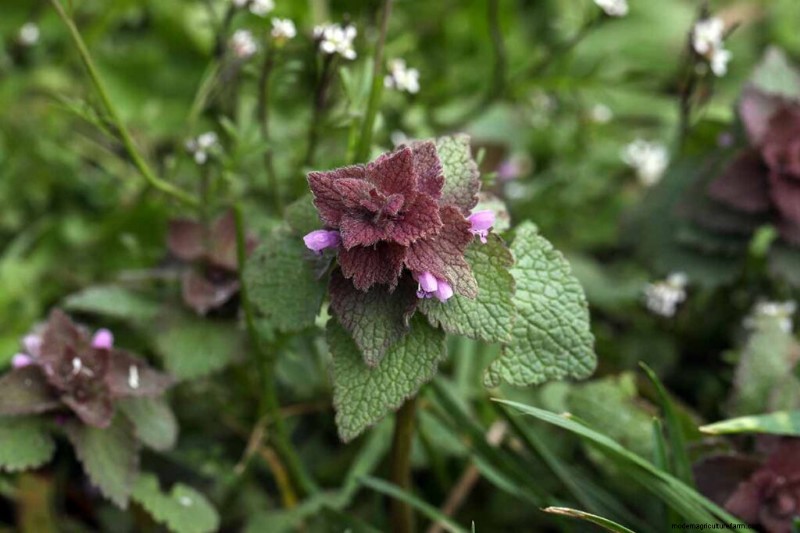
写真:Kristine Lofgren 氏。
関連製品を見つけるために、ベンダーにリンクしています。私たちのリンクのいずれかから購入する場合、 手数料が発生する場合があります .
タンポポについて考えてみましょう。数十年前、庭に黄色い花が咲いているのを見て喜ぶ人を米国で見つけるのは難しかったでしょう。
今日、非常に多くの採集者が葉、花、根、さらにはつぼみを喜んで利用しています。
タンポポの葉は食料品店でも購入できます。これは、かつて容赦なく破壊された工場が、極貧から富豪に成り上がった成功物語です。
さて、このリストは永遠に続く可能性があるため、庭や、放棄された土地や道端などの近くのスペースで最もよく見つかる北米の種に限定します。
これから取り上げる「雑草」は次のとおりです。
39 の一般的な食用および薬用雑草
食べられる山菜の多さに驚くかもしれません。
すべての既知の植物のうち、食用植物がその約 4 分の 1 を占めます。
食用の山菜の大部分(約 70 パーセント)は主に野菜として使用されており、種子やナッツで構成されている野生の食材はわずか 5 パーセントです。
つまり、雑草だけを食べていては生きていけないのかもしれません。しかし、このリストにあるすべての雑草には少なくとも 1 つの薬用用途があるため、すべてを食べる予定がなくても、それでも価値はあります。
言うまでもないですが、 私はそうします。 とにかく強調してください。自分が摘んだ雑草を正しく特定したことを常に、常に確信する必要があるということです。
また、目的の植物だけを収穫していることを確認する必要があります。ハコベなどの一部の植物は、その中に生えている毒ツガなどの他の植物と一緒に生えることがよくあります。
注意事項
許可されていない地域では決して採餌をしないようにし、食べても安全であることが確認され、化学物質や汚染物質で汚染されていない植物のみを摂取するようにしてください。
植物化学物質に対する反応は人それぞれ異なるため、アレルギーの可能性があるかどうかわからない場合は、慎重に作業を進め、味見は控えめにしてください。
医薬品の使用は常に資格のある医療従事者の指導の下で使用する必要があり、個人の健康状態や潜在的な処方薬との相互作用を常に考慮する必要があります。
いくつかの一般的な雑草をこのリストから除外しました。なぜなら、これらの雑草には有毒な類似物がいくつかあり、採集初心者にとっては識別するのが難しいからです。
たとえば、 カウパセリはチャービルの素晴らしい代替品です。 、しかし、何を探すべきかを知らなければ、ツガと見分けるのは困難です。
さて、チャットはこれで十分です。さあ、始めましょう。
1.ビタークレス
何が苦いクレソンなのかについては議論がありますが、 基本的にはカルダミンに含まれるあらゆる種です。 属は適格ですが、デンタリア属のものは適格です。 属はハサミムシと考えられています。 .
一部の分類学者や園芸家はデンタリアを分離することを検討しています。 カルダミン に属する種からの種 属は古くなり、多くは再分類されました。
しかし実際の世界では、ほとんどの人は識別を助けるために分離を維持します。これは採集者にとって特に役立ちます。
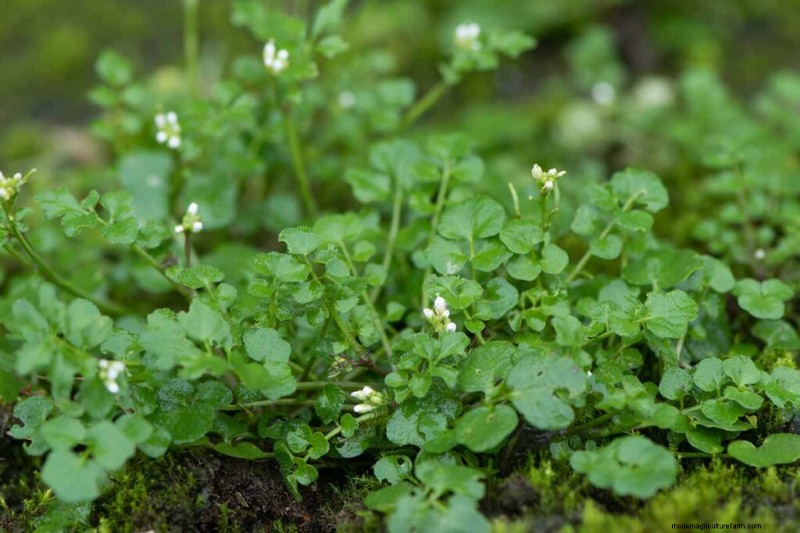
どちらも食用ですが、ビタークレソンの方が雑草が多く、庭で見かけます。ヨモギクは風味が良く、根茎から育ち、 マイルドな西洋わさびのような味わいで非常に美味しいです。 注意してください。
ビタークレソンはメインコースではなくハーブ調味料と考えてください。苦味がないので驚きです! – しかし、どちらかというとマスタードの香りです。
毛むくじゃらのビタークレス (C. hirsuta) によく遭遇します。 )、特によく灌漑された芝生で、お気に入りの場所の 1 つです。
植物は長い茎の上に小さな葉の基部ロゼットを形成します。春に、直立した茎に小さな白い花が咲きます。
種も葉も食べるのに最適な部分ですが、植物全体も食べられます。
ビタークレスの一部の種は在来種であり、絶滅危惧種または危険にさらされているものとしてリストされているため、森林の下層に生える珍しいものではなく、庭で見つけられる雑草種を狙うようにしてください。
2.ルリヂサ
ルリヂサ (ボラゴ オフィシナリス) )は、地域によっては雑草であることもありますが、他の地域では貴重な野生の花や慎重に栽培されたハーブです。
繰り返しますが、すべては視点の問題です。鮮やかな青い花はワイルドフラワーガーデンに美しいアクセントを加えます。
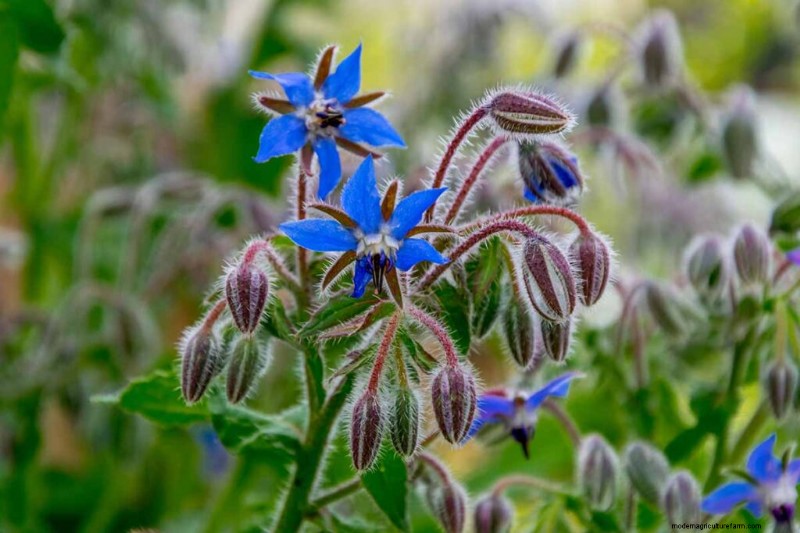
葉や花はキュウリのような味がします。 そして植物全体が不安やうつ病の治療に長い間使用されてきました。
ルリヂサについてさらに詳しく知りたい場合は、ガイドをお読みください .
3.ブランブルズ
ブランブル 実際にはキイチゴ属の複数の植物を指す用語です。 属。
私たちはサーモンベリーやラズベリーなどのベリー類の植物が大好きですが、 、ヒマラヤ ブラックベリー (R. armeniacus) のようなものもあります。 ) は間違いなく迷惑です。
容赦のない棘の蔓につかまったことがあるなら、私が何を言っているかわかるでしょう。彼らはあなたの庭全体だけでなく、隣人の庭もすぐに占拠する可能性があります。
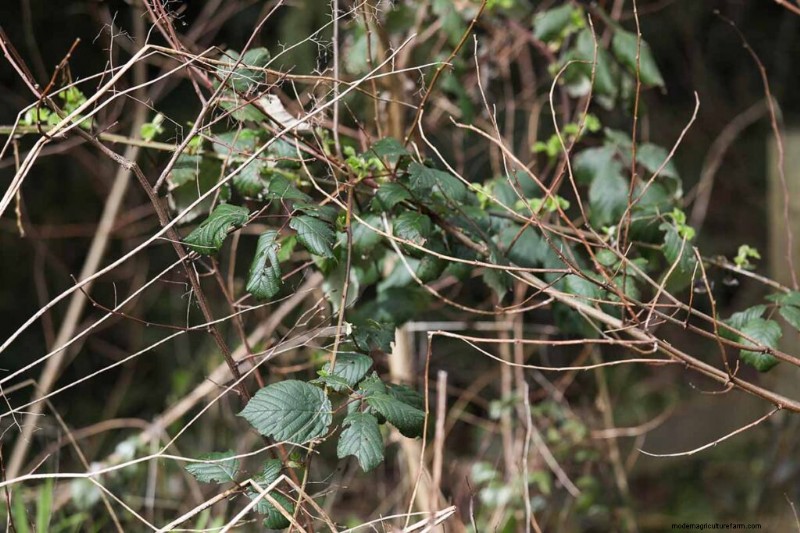
写真:Kristine Lofgren 氏。
しかし、 この外来植物と同じくらい厄介なのがブラックベリーです。 それはおいしいです。
夏には、通り過ぎるだけで弾けるほど熟して、頬張る私もいます。
ベリーには小さな虫がたくさんいることが多いので、最初にベリーを洗ったほうがいいかもしれません。あるいは、単なるおまけのプロテインだと考えてください。
ちなみに若芽も食べることができます。とげのある外側の皮をむいて、中身を食べます。
4.ごぼう
ゴボウ (アルクティウム) がある場合 spp.) が庭に生えているなら、幸運だと思ってください。
犬の毛皮やお気に入りのセーターにベルクロのようなバリが引っかかるのは、呪い以外の何ものでもないようです。
結局のところ、シード ヘッドはベルクロの発明者にインスピレーションを与えたのです。
しかし、根、茎、芽は食べることができ、おいしいです。葉っぱも食べられますが、かなり手間をかけないと美味しくありません。
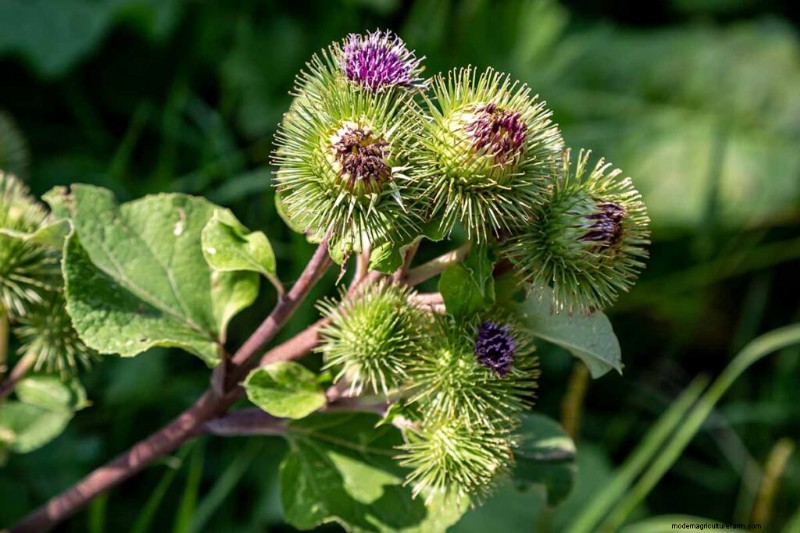
ゴボウは利尿剤や便秘を和らげる薬としても使用されます。葉は発疹や湿疹の治療に湿布として使用できます。
荒れた場所や放棄された庭園で、波立った矢の形をした大きな葉を探してください。ごぼうをルバーブの若い植物と間違えそうになります。
とがったアザミのような花は、二年草なので生後 2 年目まで咲きません。したがって、最初の 1 年は遠慮なくすべて使い切ってください。
植物を掘り起こすと、重さ3ポンドにもなるニンジンのような主根が見つかります。
ごぼうは日本料理、ロシア料理、韓国料理で非常に人気がありますが、この植物を栽培することはお勧めしません。
日本ではゴボとして知られるこの植物は侵略的であり、庭を占領することは望ましくありません。どこにでもあるので、ワイルドなものを選んでください。
ゴボウとフキ (Petasites hybridus) を混同しないでください。 )、丸い葉と赤い花が特徴です。ゴボウの花は紫色です。
名前は似ていますが、ゴボウはドックとは関係ありません。ドックについては後ほど説明します。
5.ハコベ
ハコベ (ステラリア メディア) )は、ヨーロッパから北米に侵入した外来雑草(名前にそのまま入っています!)です。
幸いなことに、食用の葉、茎、花もあるので、有効活用できます。
おまけに、常緑樹で、他の植物がほとんど生育できない密な針葉樹に覆われて冬を越すことができます。つまり、冬の栄養源があるということです。
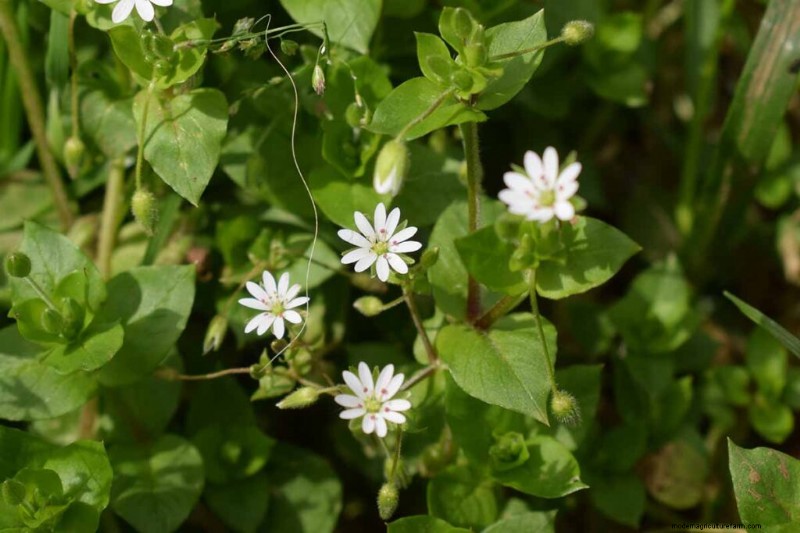
ハコベは甘くて草のような風味があり、サラダやサンドイッチに加えるのに最適です。この雑草の葉をバジルの代わりに使います。 ペストを作るために。
乾燥させると美味しいお茶になります。 。このリストにあるすべての植物の中で、最もおいしい植物の 1 つなので、お見逃しなく。
薬用としては、湿布、利尿剤、皮膚軟化剤として使用できます。このお茶は空咳の治療に役立ちます。
ハコベは地面を這う一年生植物で、小さな楕円形の葉、丸い茎、小さな白い花が咲きます。庭の花壇、 特にバラの花壇でよく見られます。 .
スカーレット・ピンパーネル (アナガリス・ アルヴェンシス) と混同しないでください。 )、有毒で、四角い茎と赤い花が咲きます。
茎の片側だけの毛のラインを探してください。これらが出現する側はノードごとに変わります。これが、ハコベと類似したハコベを見分ける決定的な方法です。
6.チコリ
最近はチコリ (キコリウム 変性種) がますます増えています。 )は、不快な雑草として引き抜かれるのではなく、野菜やコーヒーの代替品として再び栽培されています。
高さ3フィートまで成長する茎にある明るい青紫色の花序によって簡単に識別できます。道端や人通りの少ない場所で探してください。
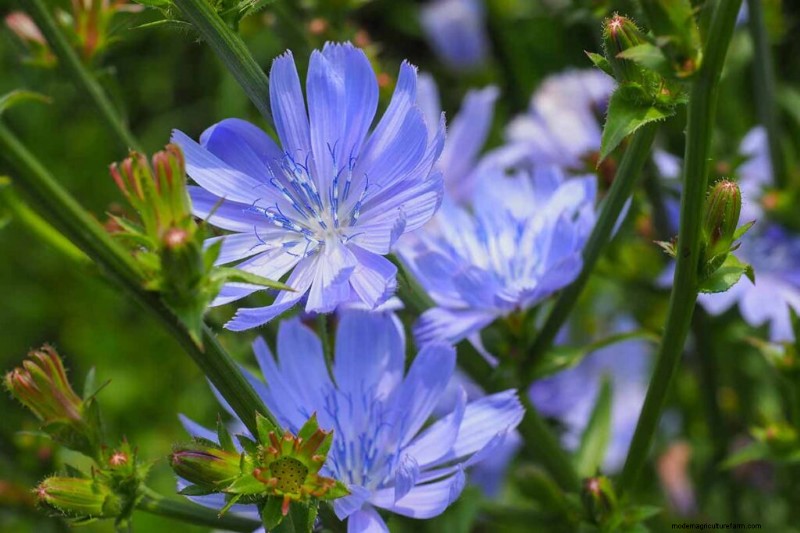
根、葉、花はすべて食用ですが、ほとんどの人が利用するのは根です。
根を焦げ茶色で硬くなるまでオーブンでローストすると、挽いてコーヒーのように淹れることができます。葉にはスパイシーな風味があり、花にはもう少し控えめな風味があります。
ほとんどの人はチコリのより苦い味よりもタンポポの葉の味を好みますが、それは比例の問題だと私は思います。
まさにエンダイブのようです。 ボウルいっぱいのレタスの葉に加えると素晴らしいアクセントになります。刻んだチコリの葉を加えるのも良いアクセントになります。
葉が苦手な場合は、植物の樹冠を収穫し、根と葉の緑色の部分を取り除き、樹冠を丸ごとまたは刻んで食べてください。
薬用としては、同じ利尿作用、下剤作用、肝臓刺激作用があるものの、タンポポの劣った代替品と考えられています。
庭にチコリがあるといつも幸運だと感じます。食用であるだけでなく、花は本当に美しいと思います。
鮮やかな青紫の色合いが際立っており、それぞれの花は 1 日だけ現れて終わります。
チコリの栽培について詳しくは、こちらをご覧ください .
7.クレイトニア
クレイトニアには、マイナーズ レタス、スプリング ビューティー、ピンクのスベリヒユ、キャンディ フラワーなど、さまざまな名前で呼ばれる数種類の植物が含まれています。
後者の通称は間違いではありません。この花はとても花柄で甘いので、キャンディーを食べているのかと思うほどです。
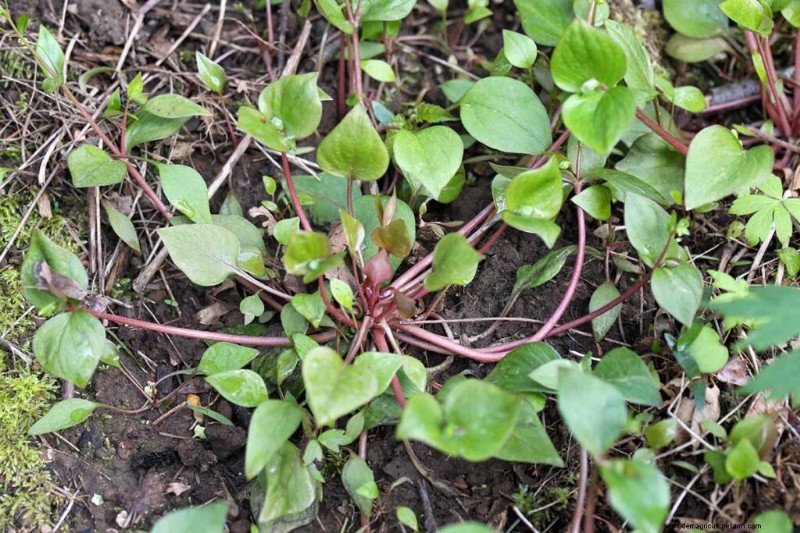
写真:Kristine Lofgren 氏。
これらの植物は、スベリヒユやマイナーズレタス (Claytonia perfoliata) に関連しています。 )おそらく識別するのが最も簡単です。カップ状の小さな葉があり、茎が突き刺さっています。
キャンディフラワー (C. sibirica) ) 多肉質の茎の上に小さな白、ピンクと白の縞模様、またはピンクの花が咲きます。
私たちのマイナーズレタス (Claytonia perfoliata ) 栽培ガイド ) 詳細については、こちらをご覧ください。
8.包丁
包丁 (ガリウム アパリン) ) この名前は、葉が衣類、ペットの毛皮、その他小さな鉤針に引っ掛かるあらゆるものに食い込むことから付けられました。
この種は湿った場所を好みますが、好き嫌いはあまりなく、乾燥した場所でも見つけることができます。
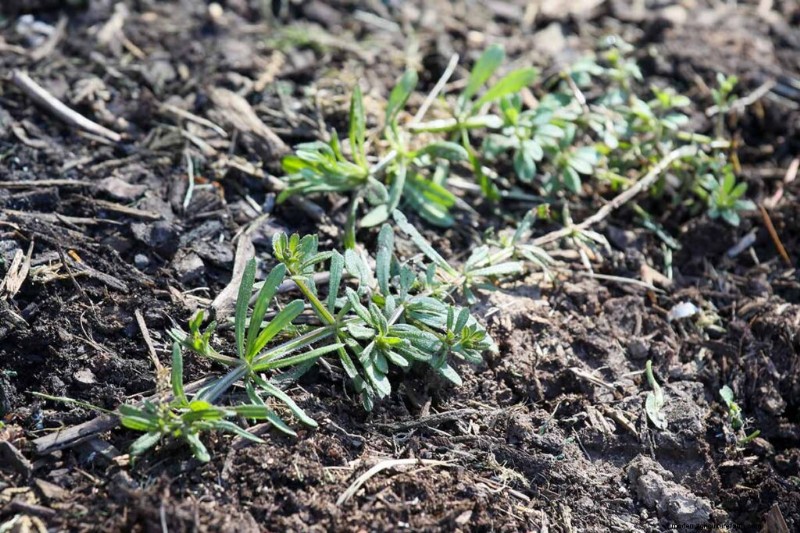
写真:Kristine Lofgren 氏。
新芽と葉は食用ですが、この植物には一年生植物と多年生植物があり、多年生植物にはギザギザの鉤で覆われた葉があることに注意してください。
このフックは喉に引っかかって、最初に煮てからでないと飲み込みにくくなります。若い葉や一年生の葉には鉤がありません。
この植物は、中央の茎から 5 枚の槍状の葉が出ており、小さな白い花が咲き、スウィートウッドラフに似ています。
この植物は利尿剤として薬用に使用され、局所的には軟膏として使用されます。
9.クローバー
クローバーはヨーロッパや北アメリカの一部の地域では飼料として栽培されていますが、他の地域では迷惑な雑草です。
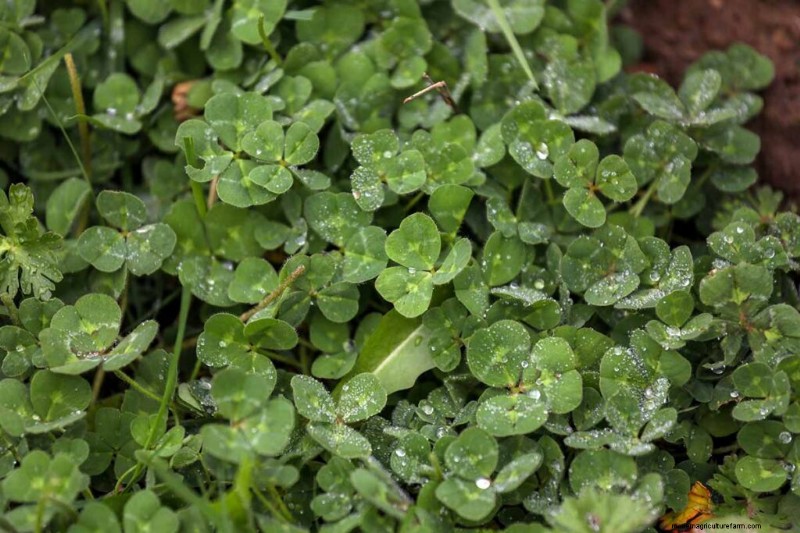
写真:Kristine Lofgren 氏。
レッドクローバー (Trifolium pratense) )は、たんぱく質、カルシウム、ビタミンB群、ビタミンAとCが豊富に含まれているため、特に庭から採る価値があります。
葉と花を食べてください。
葉から作ったお茶は咳や喉の炎症を和らげるのに使用できます。
10.忍び寄るチャーリー
地上アイビー、または忍び寄るチャーリー (Glechoma hederacea) )、お住まいの地域に応じて、腎臓の形をした鋸歯状の葉と、3 月から 6 月にかけて紫色の花が咲きます。
これは、定期的に湿気を受ける芝生やその他の庭エリアで非常に一般的です。
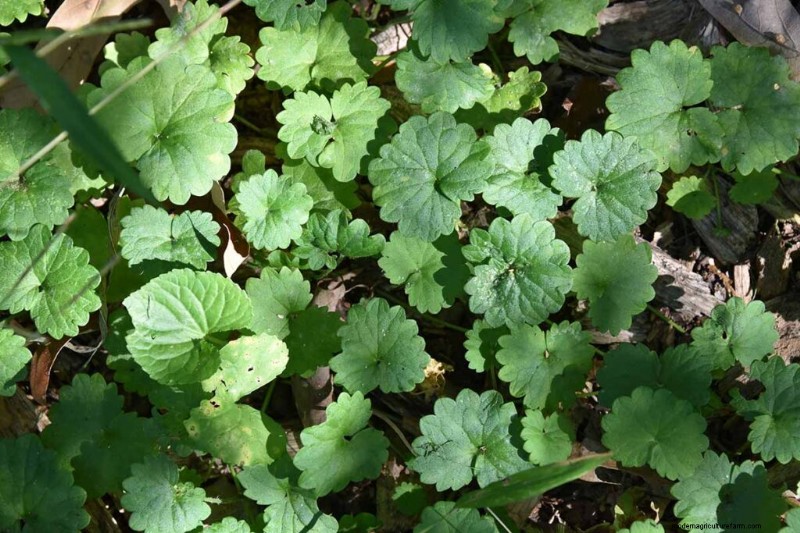
大量に摂取すると馬には有毒ですが、葉は人間が食べても安全です。
乾燥させて砕いた葉は、咳、気管支炎、その他の肺疾患の治療に薬として使用されます。
11.タンポポ
私たちは皆、古き良きタンポポ (タンポポ) を知っており、愛しています。 spp.)。
楕円形で重鋸歯のある葉と明るい黄色の花序を持ち、芝生、野原、庭園、道端でよく見られる雑草です。
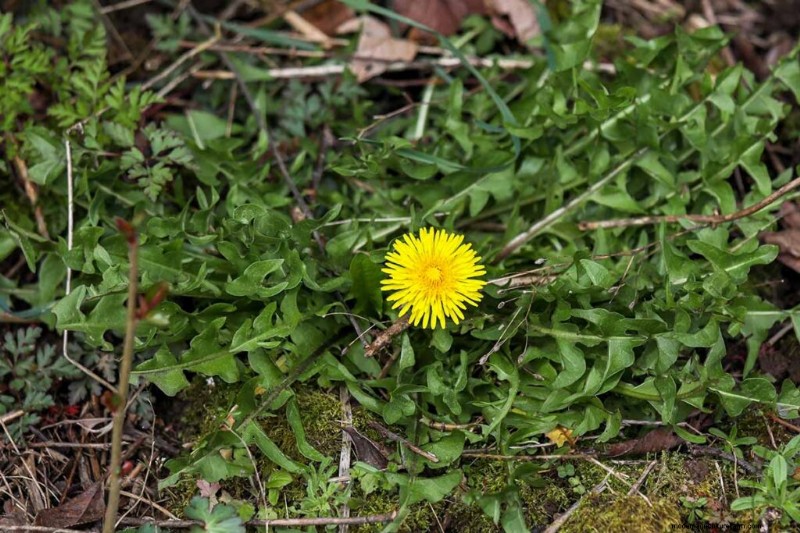
写真:Kristine Lofgren 氏。
根も花も葉もすべて食用となります。若い葉は草っぽくてまろやかなのですが、古い葉は苦い味がします。
生でも調理しても食べられますが、花は生で食べるのが最適です。
タンポポ酒、シロップ、コーヒーを作ったり、ぎっしりと詰まった花のつぼみを収穫してタンポポケッパーを作ることもできます。そして、 タンポポにはニンジンよりも多くのベータカロテンが含まれています。 !
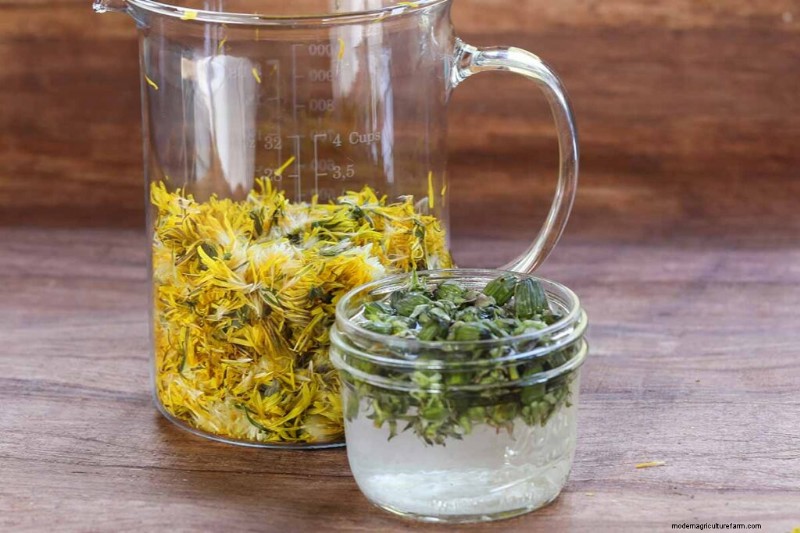
写真:クリスティン・ロフグレン。
栽培して食用にしたり、観賞用に栽培したりすることを目的としたタンポポの新しい品種も見つけることができます。
タンポポが復活する時期が来ています。なぜなら、私たちが記録を残している限り、タンポポは人類文化の重要な一部であったからです。
若い葉を収穫し損ねた場合は、数週間植物の上にボール紙を置いて湯通しし、苦みを軽減します。
根を収穫する予定の場合は、通常、その時点では葉が古くて苦くなっているため、葉を乾燥させることを検討してください。 パセリのようなハーブとして使用します。
また、消化器系の問題や皮膚の損傷の治療に薬としても価値があります。
タンポポについて詳しくは、こちらをご覧ください .
12.オドリコソウ
オドリコソウ (Lamium purpureum) ) はシソ科に属します。 、しかし、これらの植物はイラクサに似ています。
ただし、葉を指でこすると、刺激的な香りが放出されるため、ミントの関係が理解できます。
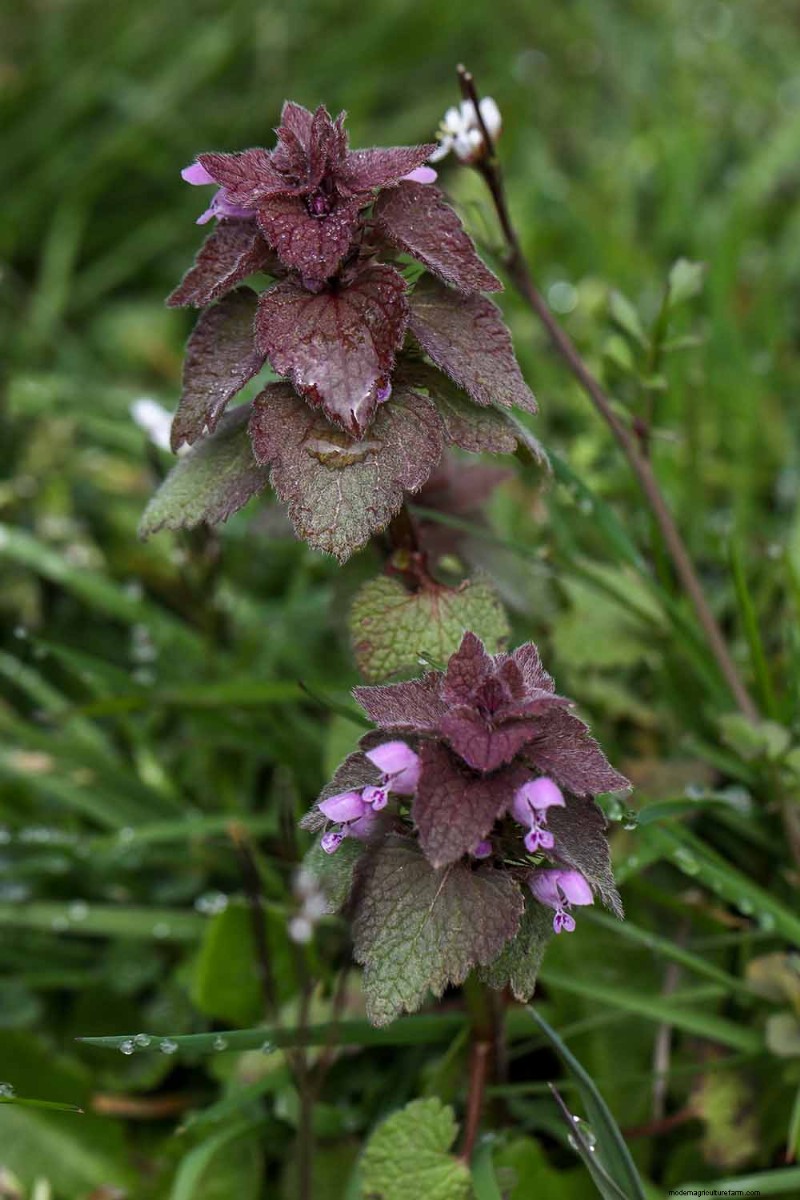
写真:Kristine Lofgren 氏。
この雑草は、芝生、荒れた場所、庭園など、生育する機会が与えられている場所ならどこでも、ほぼどこでも見つけることができます。
一年の早い時期に出現し、冬の間は温暖な地域に留まり、紫色の花を咲かせます。
葉、花、茎を食べます。紫色の葉は緑の葉よりも少し甘い傾向があります。医学的には、人々はこの種を収斂剤および利尿剤として使用します。
ヘンビット (L. amplexicaule) に少し似ています。 ) ですが、どちらも食用なので、誤って有毒なものを摘んでしまう心配はありません。
13.ドック
米国全土には、約 200 種のドックとその近縁種のスイバが生息しています。
カーリードック (ルメックスクリスパス) )、ウェスタンドック(R. オクシデンタリス) )、広葉ドック(R. obtusifolius) ) が最も一般的です。
葉は槍状で緑色で、赤い斑点や葉脈が入ることもあります。余白がカールしていたり、波立っていることがよくあります。
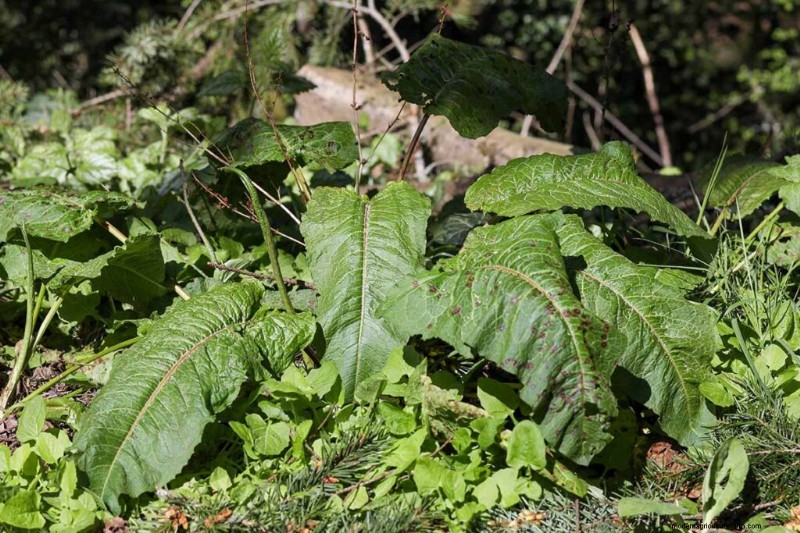
写真:Kristine Lofgren 氏。
ウエスタン ドックなどの在来ドックもありますが、その他のドックのほとんどは外来種であり、野放しに蔓延する傾向があります。
忍耐ドック (R.patiia) を見つけられたら )、あなたはとても幸運です。これは最も風味豊かな種として広く考えられています。
葉、果実、種子は食用となります。採集者は種子を粉砕して、ナッツのようなおいしい風味を持つ小麦粉の代替品を作ります。波止場はソバと関係があるので、これは驚くべきことではありません。
種の茎も秋の花束に添えて使いました。
茎も食用ですが、食べる前に皮をむく必要があります。 味と食感はルバーブに似ています。 .
カーリードックなどの一部の種にはシュウ酸が多く含まれているため、一度にたくさん食べないように注意してください。
ちなみに、雑草狩りの冒険中にイラクサに遭遇した場合は、ドックの茎を数秒間噛んでから、噛んだ部分を刺された場所に置きます。そうすれば痛みは和らぎます。
ほとんどの人は葉を使用する部分だと信じていますが、重要なのは茎の中にあるゲル状の粘液です。虫刺されや咬傷にも効果があります。
本当においしいドックの標本で、苦いものではないかどうかを判断するには、どこにも赤や紫の斑点のない、滑らかで細長い葉を探してください。
赤い斑点のある植物や葉は食べることができますが、あまり美味しくない可能性があります。
葉を摘むときは、ロゼットの中央にある葉を狙います。葉は若いためです。
葉の両端を持ち、そっと引っ張ってみると、年齢を判断できます。裂けるのではなく伸びる場合は、若くて柔らかいです。
私はこのヒントを、著名な採餌専門家のサミュエル セイヤー氏の著書『Nature's Garden:A Guide to Identifying, Harvesting, and Preparing Edible Wild Plants』の中で学びましたが、それが私を間違った方向に導いたことは一度もありません。
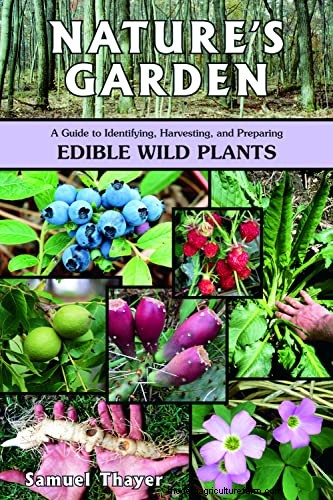
自然の庭園
野生の食物の採集と食べることについて詳しく知りたい場合は、この本が採集者にとってのバイブルと考えられています。
ペーパーバックまたは便利なスパイラル綴じのコピーとしてアマゾンで入手できます。 .
14.シダ
シダは、庭に置きたいかどうかに応じて、庭に素敵なアクセントとなることもあれば、厄介な存在になることもあります。
シダの中には、自生し環境に積極的に貢献するものもありますが、雑草として持ち込まれ、侵入してくる可能性のあるものもあります。
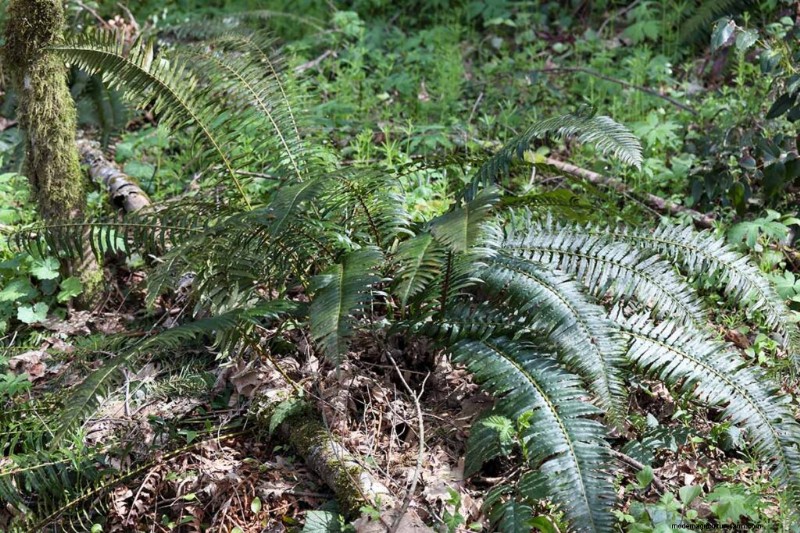
写真:Kristine Lofgren 氏。
甘草シダ (Polypodium glycyrrhiza) ) は木に生え、甘草のような甘い風味を持つ食用の根茎があり、先住民は甘いおやつとして楽しんでいた。
若い緑色の根茎が最適です。
女性シダ (アティリウム フィリックス フェミナ) ) 食用のフィドルヘッド (カールした若くて発芽した葉) と根があります。
ワラビ シダ (Pteridium aquilinum) のシオマネキも食べることができます。 )、ただし、発がん性がある可能性があるため、食用としての使用についてはもう少し議論の余地があります。
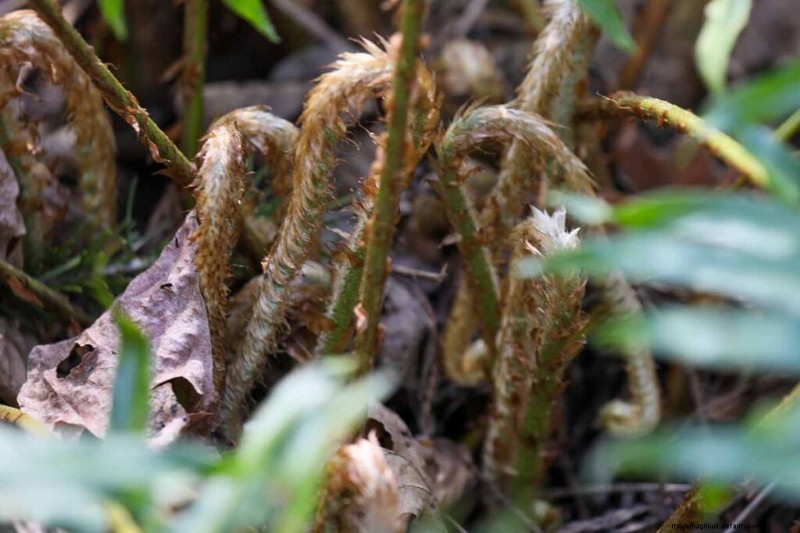
写真:Kristine Lofgren 氏。
これらには、発がん性物質として知られるプタキロシドが含まれています。ワラビのゼンマイを食べる場合は、安全のために摂取量を制限してください。
剣シダ (Polysthichum munitum) )甘草の香りを持つ食用の根があります。蒸したりローストしたりして食べてください。
シダの栽培について詳しくは、こちらをご覧ください .
15.ファイアウィード
ファイアウィード (チャメリオン アングスティフォリウム) ) とてもきれいなので、これを嫌う人がたくさんいることに驚いています。
長い槍状の葉と、高さ 3 ~ 8 フィートの茎の頂上にある長い穂にピンクまたは紫の花が咲きます。
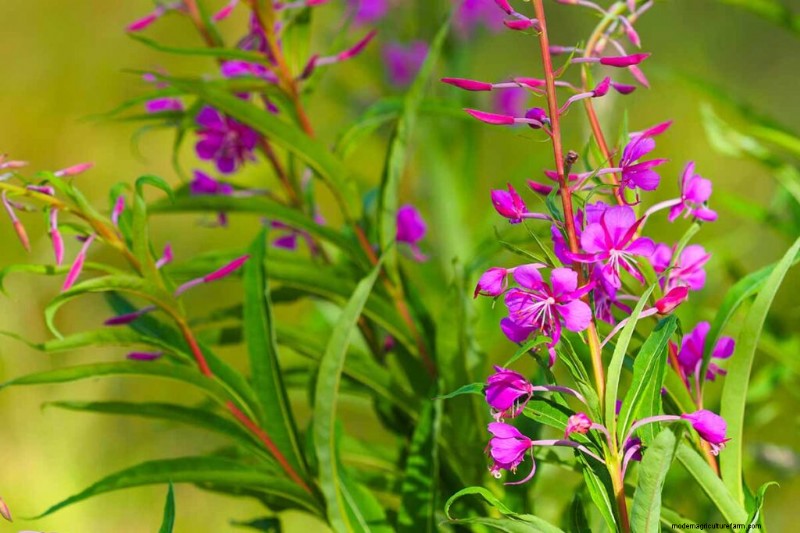
この食用雑草は湿った土壌を好むため、小川の近くや水が集まる窪地で見つけることができます。
新芽、茎、葉、花、根はすべて食用で、内部の茎は非常に甘くてジューシーです。
ファイアウィードには、ベータカロテンとビタミン C が豊富に含まれています。また、穏やかな下剤効果もあります。
16.ガーリックマスタード
ガーリックマスタード (アリアリア ペティオラータ) )は、栽培されたカラシ科の野菜として始まり、種子を取得して野生に逃げました。
現在、それは野生の花に取って代わられるため、最も嫌われている雑草の 1 つです。
これは他の植物の成長を阻害するアレロパシー特性によるもので、根絶することはほぼ不可能です。
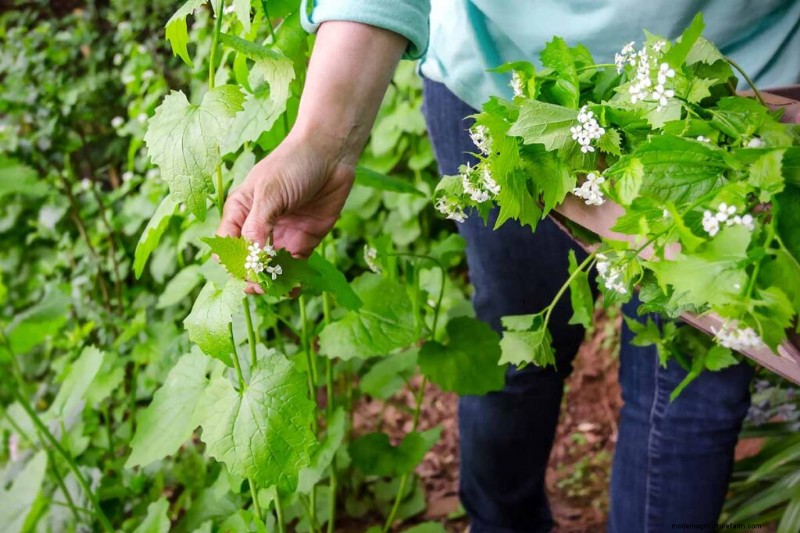
野放しにしておくと、森の下層が広大なガーリックマスタードの単一栽培畑に変わってしまう可能性があります。
しかし、この話は悪いニュースばかりではありません。料理に風味を加えるのに最適な雑草の 1 つです。
この雑草を庭から抜いたことがあるなら、その名前の由来がわかるでしょう。明らかにニンニクとマスタードを混ぜたような匂いがします。
葉は生または調理して食べることができ、主根は調理するか生のまますりおろして食べることができ、花は生または調理して食べることができます。
しかし、ほとんどの人は若い茎や開花前の芽を好みます。これらはマイルドなマスタードの風味と圧倒的なブロッコリーのような風味があり、最高の味わいです。
使いきれない場合は茎を湯通しして冷凍してください。またアスパラガスとしても美味しいです。 代わりに。
成熟した葉は風味が非常に強いので、私は乾燥させて砕いて調味料として使用するのが好きです。少しずつでも大きな効果が得られます。
この種は非常に侵入性が高いため、種子を拡散しないように注意する必要があります。これはどれだけ強調しても足りません。
幸運にも庭にガーリックマスタードがないのでエンレイソウを飼っています。 、スミレ、キャンディフラワー、ウォーターリーフ、ハサミが成長しています。
もし私がガーリックマスタードを持っていたら、これらの野生の花はもう存在しないでしょう。
野生のカラシに遭遇した場合は、歩き回ったり庭で使用したりする前に、必ず靴や道具をきれいにしてください。種は小さいので、気づかないうちに乗り物に乗ってしまうことがあります。
ガーリックマスタードの侵襲性は、好きなだけ自由に引き上げるべきであることを意味します。街へ行こう!遠慮しないでください!
ほら、乾燥させて瓶詰めして、ホリデー中に知り合い全員にプレゼントとして配るのに十分な量を収穫してください。
花が咲く前に植物に近づくようにしてください。一度そうなると、味が劣化するだけでなく、種が飛び散り始めます。
その間に、鼻づまりや鼻風邪の治療、発汗促進などの薬用に少し多めに取っておきましょう。
オラッハ、別名グースフット (Atriplex patula) の葉 そしてA.ハスタタ )、少し塩味があり、ピリッとした味わいです。
これらの植物は半多肉植物で、ガチョウが残した足跡に似た形で裂けた三角形の葉を持ちます。
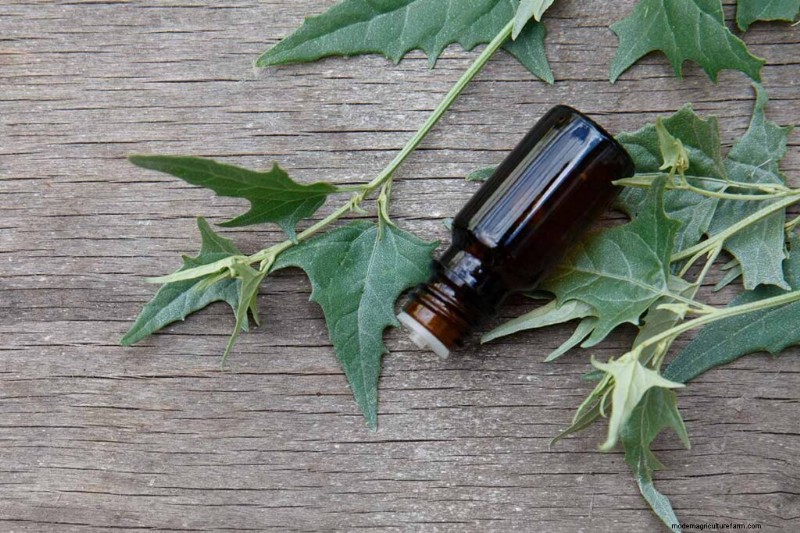
葉はほうれん草と同じように使います。 。種子を生またはローストして食べることもできます。
グースフットは塩辛い土壌を好むため、海やその他の塩水海岸の近くに住んでいる人はこの植物に遭遇する可能性があります。
局所塗布や下剤として薬として使用されます。一度にたくさん食べないでください。
この植物は子羊の四分の一とよく混同されますが、これについては後ほど詳しく説明しますが、確かに似ています。
どちらも食用で、どちらも美味しいので、これらの一般的な雑草を区別できなくても心配する必要はありません。
18.ハリエニシダ
ハリエニシダ (ウレックス) spp.) はもともとヨーロッパから来たものですが、この植物は世界中で雑草の侵入者となっています。
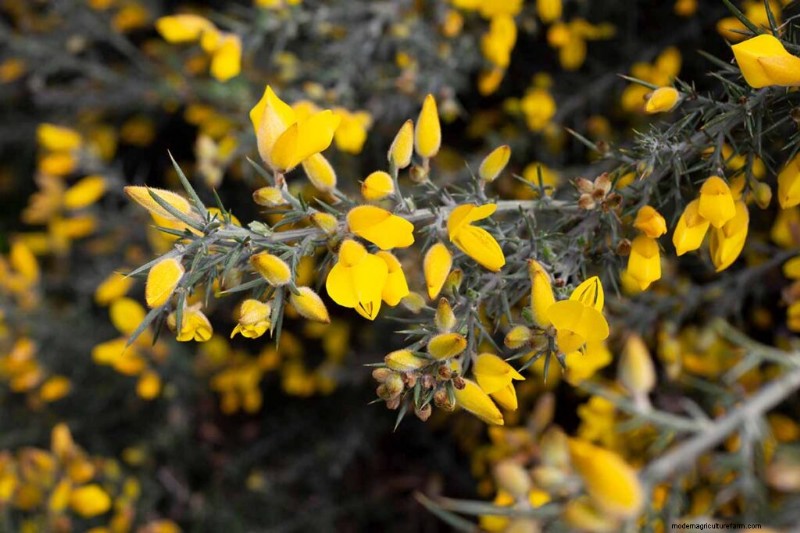
明るく陽気な黄色の花には、素晴らしいバニラとココナッツの香りがあり、デザートによく合う風味があります。頭花から突き出ている凶悪な棘には注意してください。
薬用として、ハリエニシダはノミを撃退するために局所的に使用されます。
19.スギナ
スギナは特徴的な植物です。米国では 2 つの種が蔓延しています。スギナ (Equisetum arvense) )と巨大なつくし(E. テルマティア) ).
この植物は、 アスパラガスと竹の場合に起こりそうなことのように見えます。 赤ちゃんが生まれました。
どちらも長くて分枝していない茎があり、先端が黒いです。中空の茎は枝の渦巻きで覆われています。
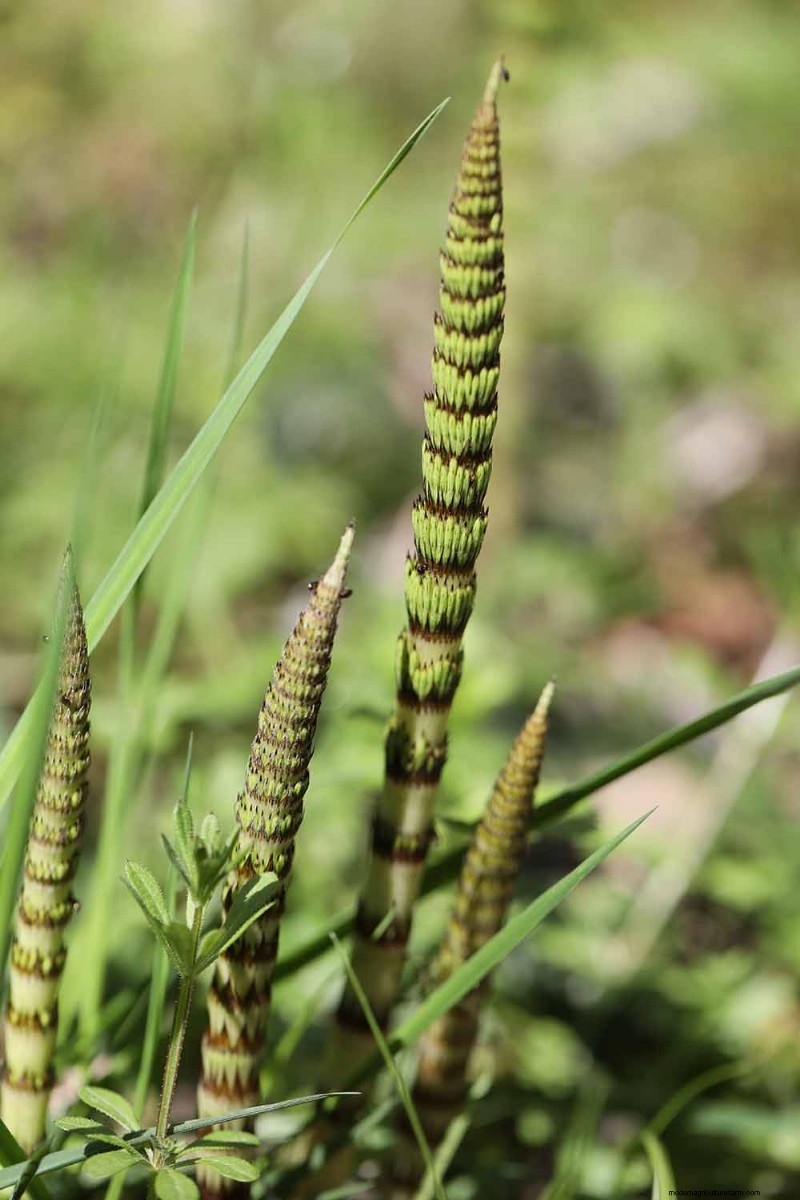
写真:Kristine Lofgren 氏。
スギナは、道端の溝や沼地の近くの湿った場所に生えます。
この植物は大量に摂取すると、特に家畜に有毒ですが、硬い外鞘を剥がして蒸しれば若い芽を食べることができます。
調理中に水を何度も捨てたり入れ替えたりすることで、毒性を軽減し、苦味を取り除くことができます。植物の成熟した部分は食べないでください。
スギナは利尿剤として、また肺の問題の治療に薬として使用されます。
20.イタドリ
この植物が庭にあるなら、あなたはおそらく自分の不運を呪っているでしょう。
それは信じられないほど侵入的であり、太平洋岸北西部のような場所では、景観の多くの部分を占領しています。これらの丈夫な植物は、家屋に侵入したり、セメントを突き破ったりすることもあります。
巨大なイタドリ (Polygonum cuspidatum) ) とイタドリ (P. sachalinense) ) は米国で最も一般的に見られる種です。
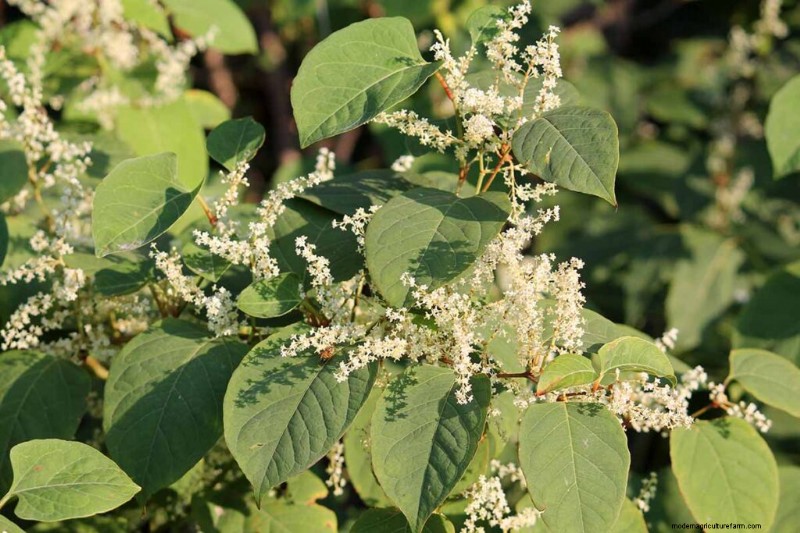
竹のような茎とハート型の葉をもつ植物です。茎は中空で赤褐色です。
成長をまったく奨励すべきではありませんが、自生している場合は、庭から根絶するために新芽を脇に置いておきます。
素晴らしいですね!レモンのようなルバーブのような風味があり、そのためこの植物が一部の地域でルバーブの代替品として使用されています。
芽は柔軟で弾力のあるものでなければなりません。固まると食べられなくなります。
21.クズ
ガーリック マスタード、葛 (プエラリア モンタナ) を添えて ) は、庭で見るのが怖い雑草の 1 つです。
それは信じられないほど、衝撃的で、驚くほど侵略的です。ガーリックマスタードと同様に食用ですので、できるだけたくさん食べてください。
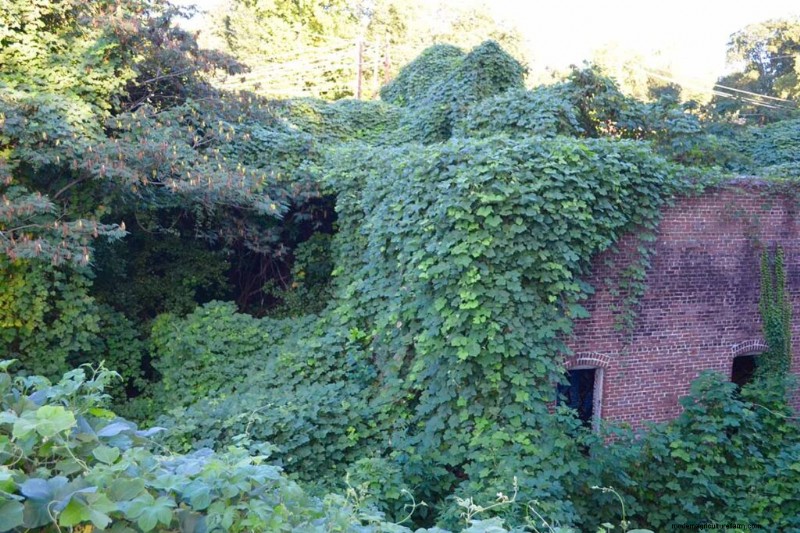
葉、根、花、蔓の先端は食用ですが、蔓、種子、種子のさやは食べられません。
調理するとこの植物のぬるぬるした食感は、スープを濃くしたり、オクラのようなレシピへの追加として使用できます。
この植物自体にはあまり風味がないため、人々がこの植物をキッチンで使いたがる理由の 1 つは、その食感です。
根は何世紀にもわたって中国医学で吐き気、二日酔い、インフルエンザの治療に使用されてきました。
料理のとろみ付けとして使用する葛粉を中国食料品店で購入することもできます。
22.淑女の親指
湿った場所では、さまざまな名前の女性の親指、スマートウィード、ベトナム産コリアンダー、またはアオアシシギ (Persicaria maculosa) を探してください。 ).
このソバの仲間はかなり乾燥した地域でも生きられるので、庭が十分に湿っていないと思ったからといって無視しないでください。
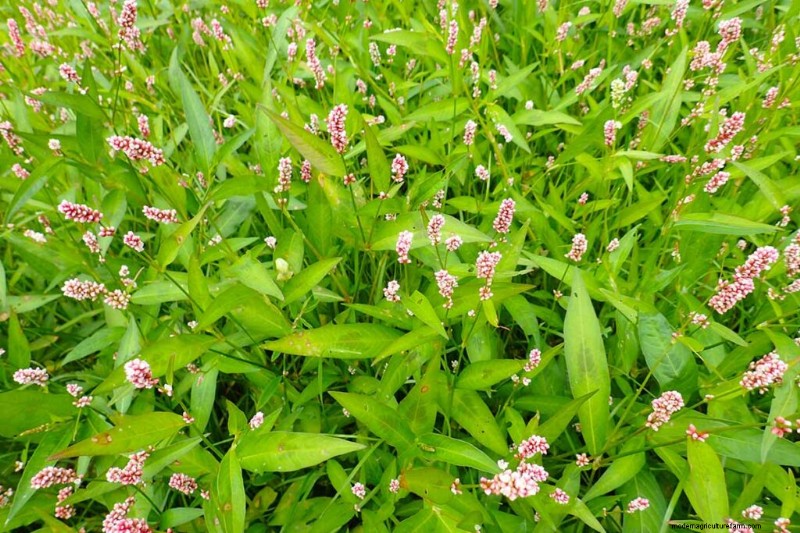
この雑草は茶褐色の茎に槍形の葉があり、必ずしも風味があるわけではありませんが、すべての部分が食用です。
葉の中心にある黒い色素を探してください。これは拇印に似ていると言われています。
女性の親指も薬草として欠かせません。発疹、虫刺され、咬傷の治療に局所的に使用されます。体内では、胃の痛みを和らげるのに役立ちます。
23.ラムズクォーター
アカザ、ホワイトグースフット、ラムズクォーター – アカザのアルバム そしてC.壁画 多くの名前で呼ばれています。
これらは歯があり、三角形、長方形、または菱形の多肉質の葉を持っています。
葉の裏側には細かい白いコーティングが施されています。夏には、植物は銀緑色の花の茎で覆われます。
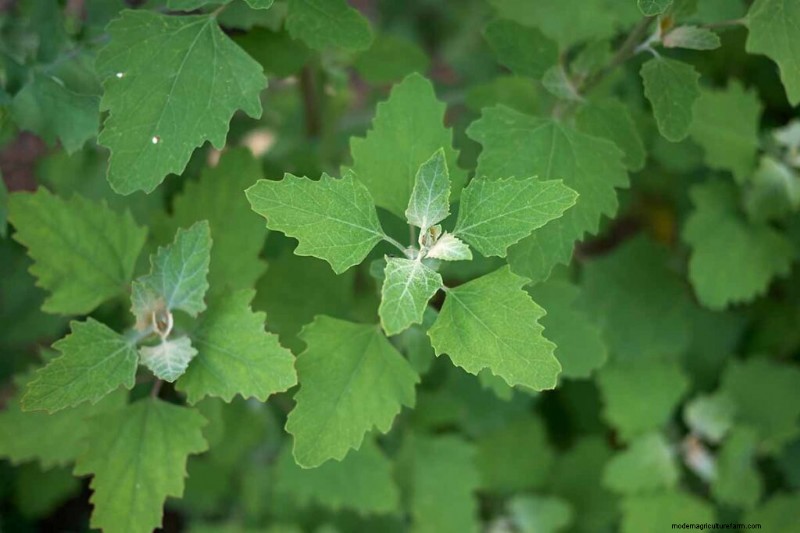
荒れた場所でも子羊のクォーターを見つけることができますが、これらの雑草はローム質で肥沃な土壌を好みます。彼らが常に必要とするのは、十分な太陽の光であることです。
見つけたら葉や花芽、新芽などを食べることができます。種子を食べることを勧める人もいれば、わずかに有毒である可能性があると言う人もいます。
種子にはカリウム、カルシウム、リンが豊富に含まれています。子羊のクォーターはキヌアに関連しており、種子は代用品としてよく使用されます。
野菜、香味野菜、サラダ菜として使用したり、乾燥させて調味料として使用したりできます。このリストにあるすべての植物の中で、子羊のクォーターには最もおいしい葉がいくつかあります。
これはまさに採集者の親友です。他の多くの植物が休眠しているか、乾燥しすぎている時期です。
夏の終わりに種を蒔いた後でも、種は植物から落ちるまで収穫して使用することができますが、それには数か月かかります。また、信じられないほど栄養価が高く、風味豊かです。
24.マロウ
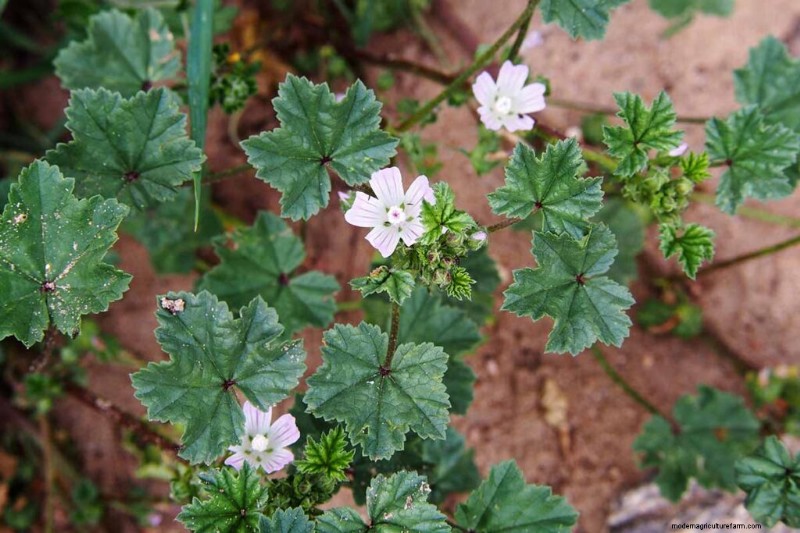
マルバ ネグレクタ 一般にゼニアオイとして知られる、信じられないほどの食用植物です。葉や花は生、調理、または乾燥させて食べることができます。
また、種が大きいので、お米と同じように使えます。しかし、さらに興味深いのは「チーズ」です。
花は白、青、ライラック、またはピンクです。花が散ると、「チーズ」または「チーズホイール」が形成されます。
これらはオクラと同じように使える黄緑色の小さな果物です。 または、そのまま生で食べてください。
Once the cheeses dry on the plant, you can harvest the seeds.
Because this plant is so common across the globe in disturbed areas and roadsides, you can gather enough seeds to make enough mallow rice to feed a family!
If you’re really adventurous, you can boil the roots to create a gelatinous goo that you can use to make homemade marshmallows.
The root can be boiled and used topically to soothe rashes or other types of skin irritation, or boiled to ease a cough or sore throat.
All parts of the plant are a bit mucilaginous, so some people don’t like the raw texture. This effect is reduced when you cook it.
On the medicinal side, chewing the leaves releases the mucilage that can help to relieve a cough or sore throat.
Mallow leaves look a bit like those of geraniums 。 If you’re not certain that you’ve found mallow, look closely at the spot where the stem meets the leaf. There should be a little red spot there.
25. Mullein
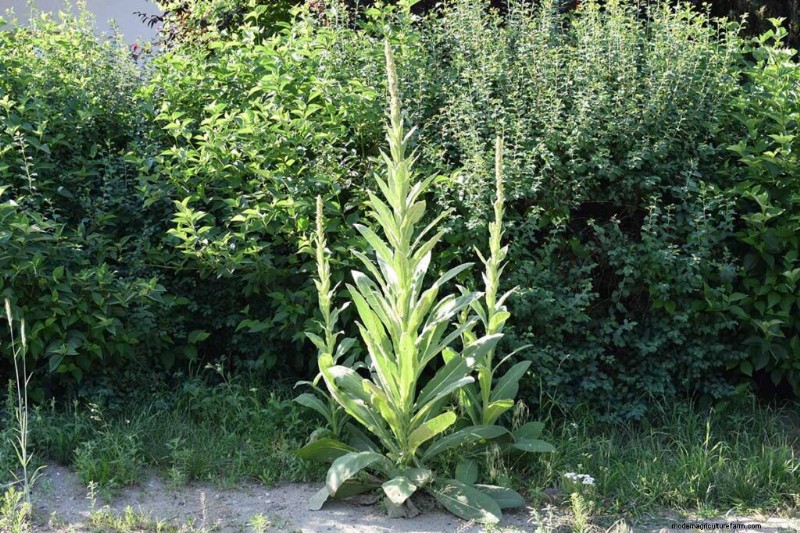
Mullein (Verbascum spp.) isn’t a weed that you’ll usually see in gardens or lawns, but it’s constantly popping up along roadsides and in disturbed areas.
When boiled in milk, the leaves release a gelatinous sap that some people use to ease a sore throat or cough. You can also make tea out of the leaves or yellow flowers.
While you should never eat the seeds, the young leaves are edible when boiled. I say “edible” because they’re not the most flavorful, but they are nutritious.
Mullein is easy to identify. It has gray, hairy leaves and a flower spike that can grow up to seven feet tall, covered in yellow blossoms that almost look like a stalk of corn.
26. Nightshade
There’s one plant that people can never seem to embrace when we talk about eating weeds.
No matter how many times I’ve assured my friends that nightshade is not only edible, it’s delicious, they still fear that it might be secretly “deadly.”
If the idea of eating nightshade freaks you out, just remember that potatoes, tomatoes , peppers , and eggplants are also nightshades.
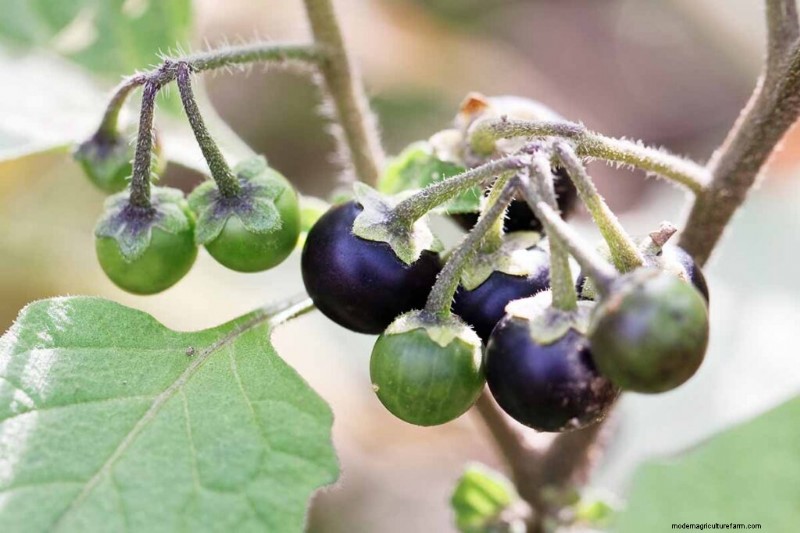 Solanum nigrum
The weedy form of nightshade is called black nightshade (Solanum nigrum ).
To clarify, there are actually multiple species that are usually lumped together in the “Solanum nigrum complex.”
These include S. interius , S. douglasii , S. ptycanthum , and S. americanum 。 S. nigrum is native to the Mediterranean, while the rest are native to North America.
While it doesn’t get much attention as an edible in the US and Europe, it’s one of the most well-used weeds in the rest of the world.
It’s sort of like the dandelion, amaranth, or stinging nettle of Africa and Asia, where billions of people eat it regularly.
Native people in North America have also consumed the berries for centuries.
You can sometimes find this plant at nurseries under the name “garden huckleberry.”
Most people identify the plant by the dark, nearly black berries that follow the whitish flowers, which bloom in June. The leaves can be lanceolate or diamond-shaped, and vary in size.
Nightshade is a common weed in gardens, fields, abandoned lots, roadsides, and other disturbed sites.
So where does the myth that nightshade is deadly come from? Well, it looks a bit like the plant commonly known as deadly nightshade, or Atropa belladonna , which is native to Europe.
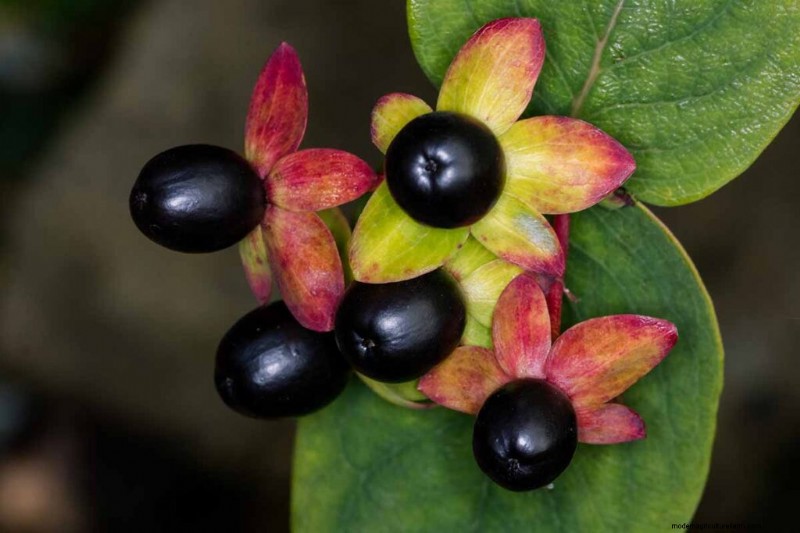 Atropa belladonna
Fortunately, it’s pretty easy to tell the two apart. Belladonna has single, cherry-sized fruits on upright stems, while black nightshade bears pea-sized fruits in clusters on sprawling, climbing, or crawling stems.
Belladonna also has purple flowers – not white ones – and it is rare in most of the US. You usually only find it on the coasts.
Once you’re sure you’ve identified the right plant, you can use the berries as you would any other.
Eat them in pies, made into jams, as a topping for desserts or yogurt, or just by the handful. They taste like a ripe tomato and a blueberry had a delicious baby.
27. Pigweed
Pigweed can be an annoying weed or an invaluable crop, depending on your perspective.
Some species are cultivated for the seeds, like the crop we call amaranth, and some are grown as ornamentals, like love lies bleeding .
Others pop up in vacant lots and disturbed fields, and resolutely refuse to budge no matter how much you plead with them to leave.
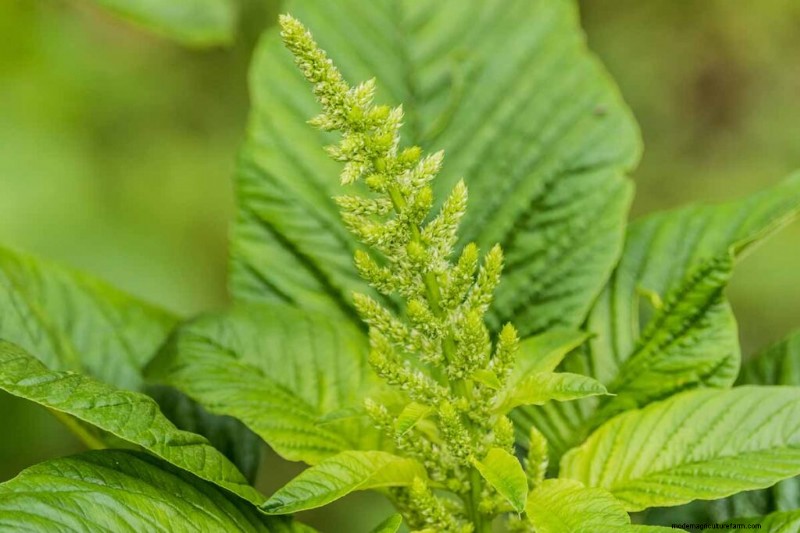
Redroot amaranth (Amaranthus retroflexus ) is the most common weed in the US in this genus.
The flower clusters are spiny and they have a musty scent. The lower part of the stem is red, making it easy to pick out. If you dig it up, the taproot will be red as well.
You can eat the leaves and stems, and they’re particularly tasty when they’re young.
Amaranth is high in protein and many vitamins and minerals, which is why it is cultivated as an easy-to-grow source of nutrition in developing nations.
28. Pineapple Weed
Where there is compacted ground, there’s likely pineapple weed (Matricaria discoidea )。 This stuff isn’t afraid of rocky, hard soil and it pops up where most other plants fail to thrive.
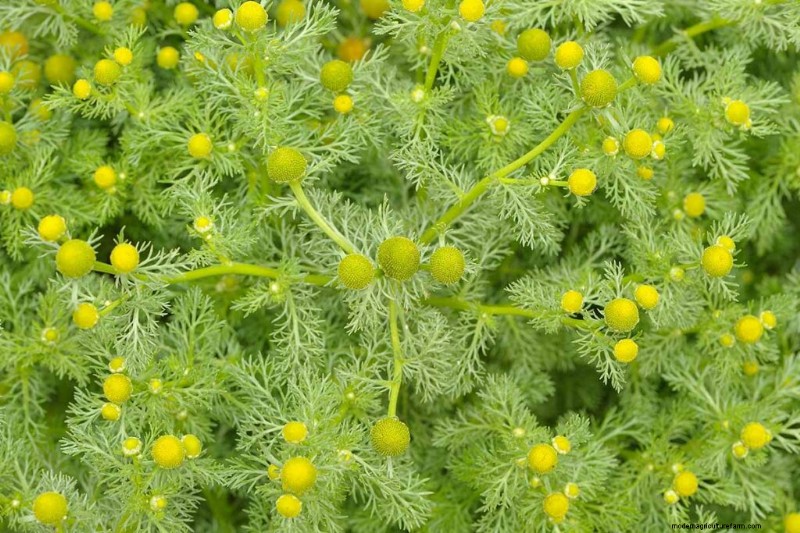
It looks a bit like chamomile , to which it’s closely related. But you can tell pineapple weed apart from its cultivated relative by looking at the petals.
On pineapple weed, there are none, or very few. The seed head on chamomile is ringed by petite white petals.
This species only grows from the Rocky Mountains west. You can eat the flowers and leaves.
Just as you might drink chamomile tea for its calming abilities, pineapple weed is used medicinally for the same effect.
29. Plantain
There are dozens of species of plantain in the US, with most of them being invasive imports from Eurasia.
Common plantain (Plantago major ) is also known as broadleaf plantain, while ribwort (P. lanceolata ) is just as common, but didn’t earn the “common” epithet.
In some areas of the US, plantain is just as common as dandelion and grows in similar areas, including through cracks in sidewalks.
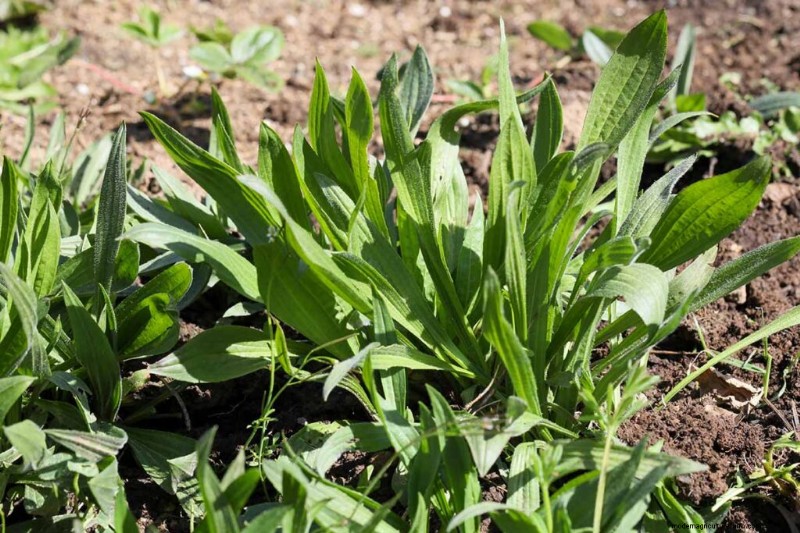
Photo by Kristine Lofgren.
Native Americans called plantain “white man’s footprint” because Europeans brought it with them everywhere they went, and the plant quickly settled in.
Bad news for local ecosystems, good news for weed eaters.
You can eat the leaves and seeds of this plant. Young leaves are tasty fresh, while older greens should be cooked. Try them battered and fried.
The fresh seeds are marvelous when added to breads or crackers, or ground as a wheat flour alternative.
The seeds can also be roasted or boiled, though the latter option activates their mucilaginous quality. Foragers use it as a substitute for store-bought psyllium fiber – which in fact comes from plantain seed!
Several species are called psyllium commonly, and P. ovata and P. psyllium are often used to make the fiber supplement.
Plantain leaves may be used as a poultice by boiling them and placing them on a wound.
The leaves also have a mild laxative effect, while the effect of the seed is more pronounced. And the seeds of P. psyllium have a much more pronounced laxative effect, so use caution.
Look for the wide, oval leaves and long, green flower spikes that follow the white flowers. Plantain is a common sight in disturbed areas, especially those with compacted soil.
Learn about growing plantain here .
30. Purslane
I don’t know what it is about purslane (Portulaca oleracea ) and roses, but the two seem to be joined at the hip.
This weed grows across the US and is cultivated in many areas, particularly the varieties known for their flowers.
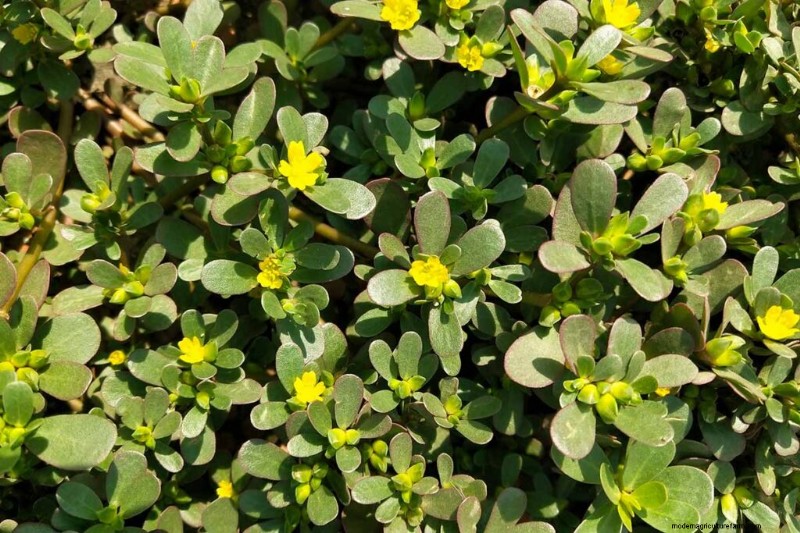
Look for purslane in disturbed areas, sandy soil, and in rose beds. It has small, succulent leaves.
You can eat all of the aboveground parts. The plant is often used medicinally as a diuretic and anti-inflammatory.
If you’re interested in cultivating some in your garden, we have a guide to growing purslane to help you out .
31. Self-Heal
You might have guessed by the name that self-heal (Prunella vulgaris ) is valued for its medicinal qualities.
Also known as heal-all or woundwort, people have used it to heal sore throats for centuries. But this mint relative is mostly reviled as a lawn-smothering weed.
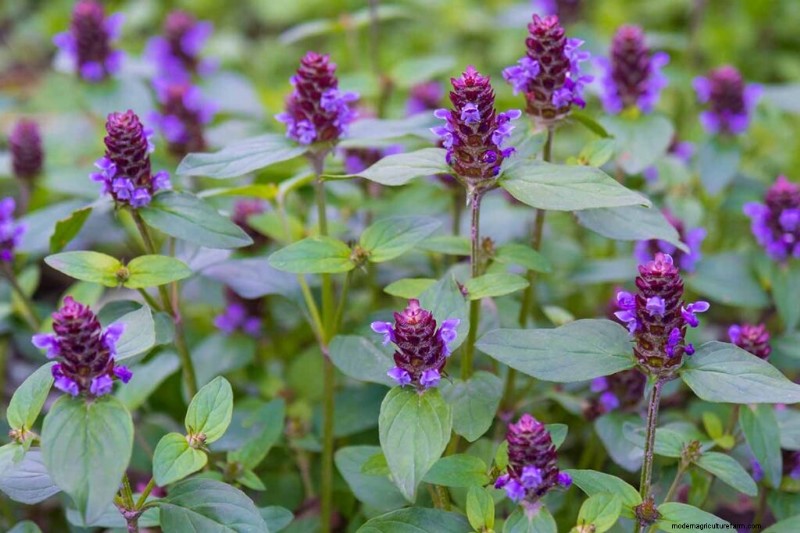
Self-heal has oval or lanceolate leaves on a square stem topped by purple flowers in the summer.
You can eat the entire plant, roots and all, either cooked or raw.
32. Shepherd’s Purse
If you’re a fan of mustard plants, you’ll love shepherd’s purse (Capsella bursa-pastoris )。 The young leaves and seeds have a peppery, mustard-like flavor.
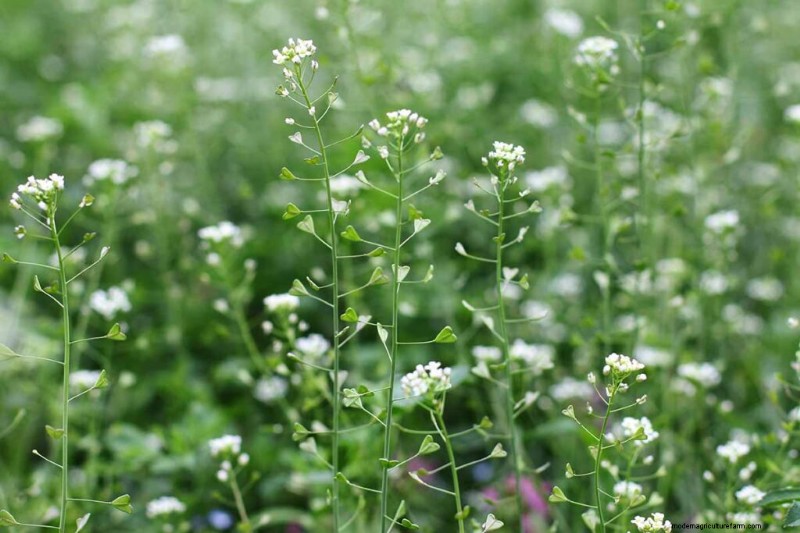
Harvest as much as you can find, because this plant is invasive in some areas, and it can serve as a host to certain species of fungi that may infect the veggies in your garden.
Look in disturbed areas and meadows for the narrow, oblong, toothed leaves extending directly out of thin stems.
The plants are topped with heart-shaped seed pods and white flowers in the summer.
33. Sorrel
Sorrel is a term used to describe several different weeds in the closely related Oxalis and Rumex genera.
Perhaps the best-known sorrel in the West is oxalis, aka wood sorrel or sour grass (Oxalis oregana )。 The leaves and stems of this little leafy green have a tart, apple-like flavor.
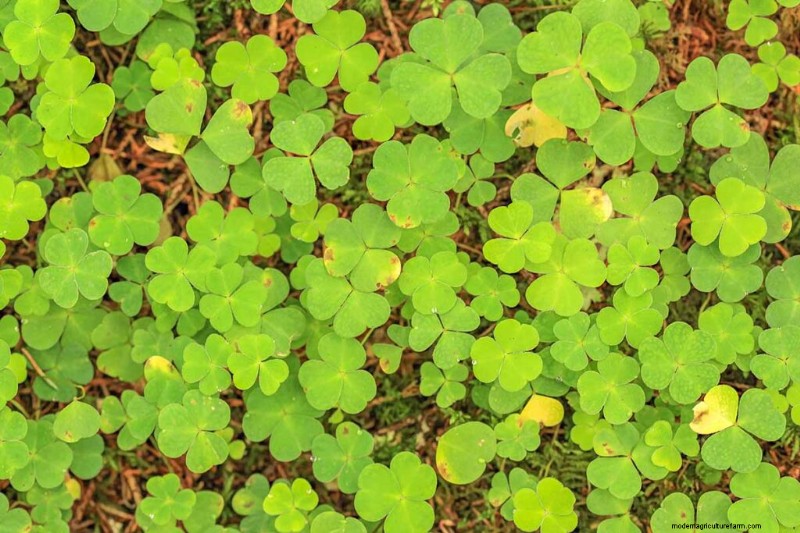
It has three heart-shaped leaves that are often mistaken for clover. You can find this plant under trees or on the north side of buildings.
If you have it in your garden, you likely have a bountiful source of nutrients available, because it’s pretty difficult to control.
Sheep sorrel (Rumex acetosella ) is actually a type of dock (see the section above) and another common weed that shows up in wet locations.
It has arrow-shaped leaves and red or yellow flowers. The leaves are edible, with a tart flavor. Use them to make salsa verde or juice them with carrots and apples.
Any of the Rumex genus sorrels can be used as a rhubarb substitute if you peel and cook the stems.
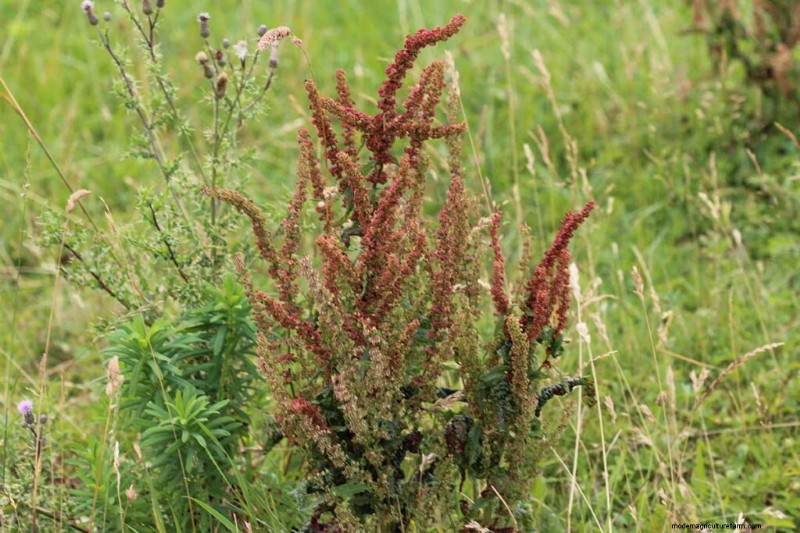
Some species in this genus (such as O. tuberosa ) are cultivated for the tubers, which are dried in the sun. Once they’re dry, they taste similar to figs .
While the weedy versions we have in the US don’t have the same large tubers, you can still eat the smaller ones. Try them fresh or dried.
Don’t eat a ton of any kind of sorrel, though, because these plants contains oxalic acid and can cause digestive upset in large quantities.
34. Stinging Nettle
Most of us have heard of nettle soup or nettle tea by now.
Stinging nettles (Urtica dioica ) suck to brush up against, but the young leaves are extremely tasty and full of all kinds of nutritious goodness, like lots of protein and calcium for leafy greens.
They’re also high in calories, for a wild food, with 65 calories per 100 grams.
When it comes to eating foraged foods, calories are hard to come by, which makes stinging nettle a valuable food source.
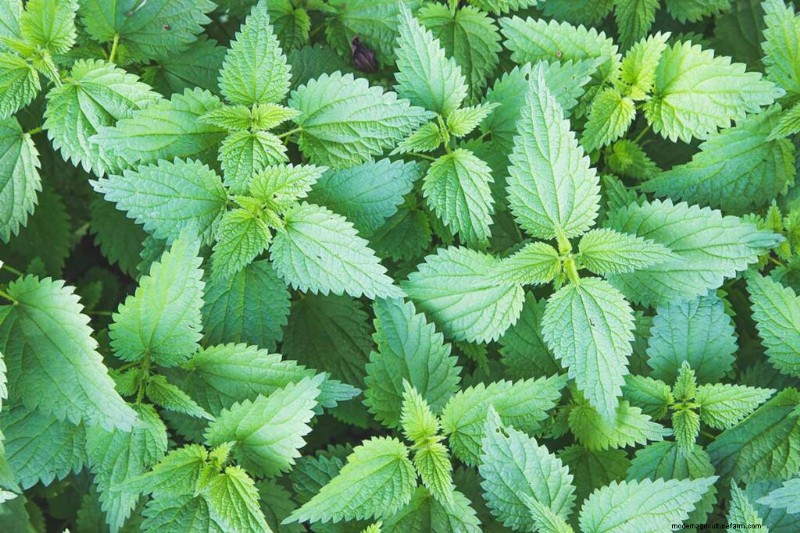
You can be sure you’ve stumbled into some stinging nettle if you brush up against it and your skin erupts into burning pain.
But there are better ways to identify the plant. Look for it in shady, moist areas. The plant has oval or triangular leaves that are heavily toothed.
Young leaves are best, but they should always, always be cooked or dried. I can’t even imagine the pain of biting into fresh, raw stinging nettle leaves.
Speaking of, wear gloves and a long-sleeved shirt when you harvest the stuff.
I know people who have figured out how to harvest bare-handed but I’ve never had any luck, so collect this way at your own risk.
The stinging needles are on the undersides of the leaves, so if you grab the plant by the stalk and break it off, you can potentially avoid the pain.
Medicinally, people use this plant as a diuretic and an anti-inflammatory agent. In Latin America, the fresh leaves are whipped onto the lower back to ease sciatica. This is known as ortigarse.
I can personally attest to its value in relieving seasonal allergy symptoms. Just boil up the leaves in a cup of water, strain, and drink the tea once every eight hours or so.
Learn more about stinging nettles here .
35. Sumac
If you stop cultivating a part of your garden, one of the first plants that will often pop up is sumac (Rhus spp.).
Of the dozens of species you might find in North America, smooth sumac (R. glabra ) is the most common.
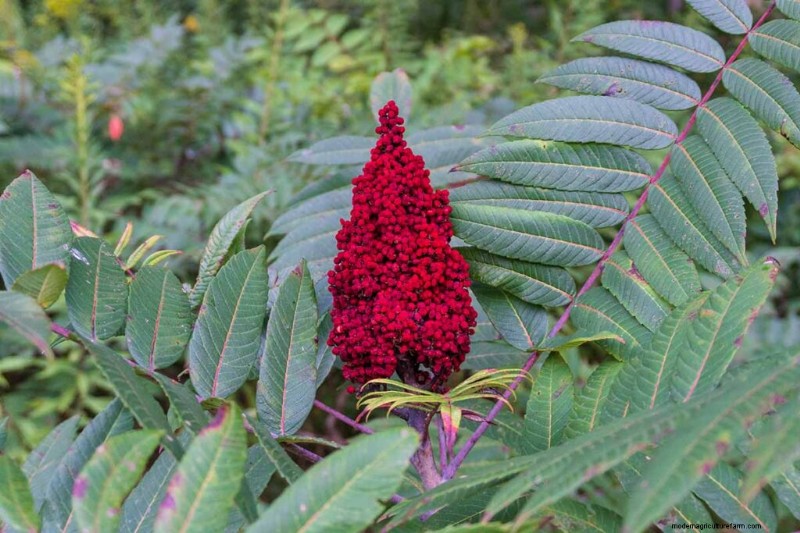
You’ll quickly learn to recognize the clusters of red berries (technically drupes) at the end of the branches.
The leaves are narrow and alternate. You’ll usually find this plant in dry areas, but they’re pretty adaptable.
The berries are edible, as are the young shoots if you peel them and cook them.
The one thing to remember is that you can only eat from the trees that produce red berries.
There is one poisonous sumac out there, but it has white berries. Poison sumac (Toxicodendron vernix ) isn’t actually part of the same genus, but it looks deceptively similar.
36. Thistle
Thistles look unwelcoming, with their spiny leaves and flowers.
But species such as bull thistle (Cirsium vulgare ), blessed thistle (Cnicus benedictus ), Canada thistle (Cirsium arvense ) and milk thistle (Silybum marianum ) are hiding a delicious treat behind that surly exterior.
All of them are both edible and have medicinal uses.
Thistles are fairly easy to recognize. They’re usually spiny on the leaves and stems and have white to purple disk flowers at the end of the stalks.
I actually think some of them are quite pretty, though the leaves can be unpleasant to step on if you’re barefoot.
The flowers, roots, and peeled stems can be used in the kitchen.
The roots can only be eaten before the flowers have formed. Peel them and roast or boil them.
The stems are also better if you eat them before the flowers form.
Up to that point, you can eat them peeled and raw and they have an incredible celery-like flavor. After flowering, you’ll definitely need to peel and cook the stems.
Be sure to pluck and eat the flower heads before they go to seed. You don’t want a mouthful of fluff. Eat the flowers as you would artichokes by cooking, peeling, and eating the tender hearts.
Despite their attempts to deter you with those unpleasant spines, you can eat the leaves of many species.
Canada, or creeping, thistle leaves are delicious and you can either slice off the spines or just crush the leaves and enjoy.
Milk thistle is used as a liver tonic.
37. Valerian
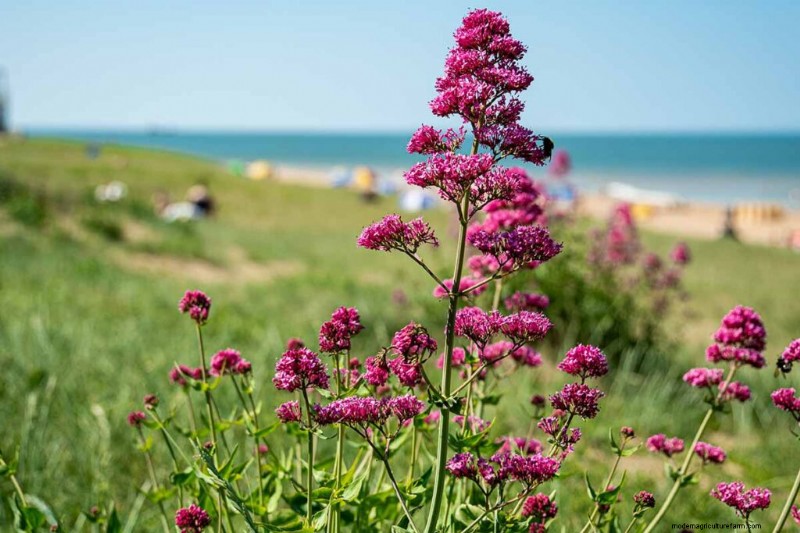
Red valerian (Centranthus ruber ) is one of those weeds that has earned some newfound respect.
Now, instead of shunning it, some people are welcoming valerian for its bright pink pollinator-attracting flowers.
But it can be invasive in some areas, so it’s best to use it up rather than letting it run rampant.
This plant loves neglected areas with poor soil in full sun.
To clear up any confusion, this isn’t the valerian that is valued for its medicinal root. That’s Valeriana officinalis .
The leaves are edible either cooked or raw.
The rest of the plant is technically edible, but one bite and you’ll probably decide it’s best left alone. All of the parts besides the leaves are monstrously bitter.
If you boil up the root, repeatedly pouring out and replacing the water, you can reduce some of the bitterness.
Some people use this plant medicinally as a sedative, but they’re likely confusing the plant with true valerian.
However, some research has shown that the plant can have a depressive effect on the nervous system.
38. Violets
Violets (Viola spp.) fall under the category of welcome weeds, in my book.
I know some people hate them, especially when they creep into a carefully-maintained lawn. But the violet, yellow, or white flowers are awfully pretty, and this isn’t an invasive plant.
Some species of “weedy” violets are native, and some have escaped during cultivation.
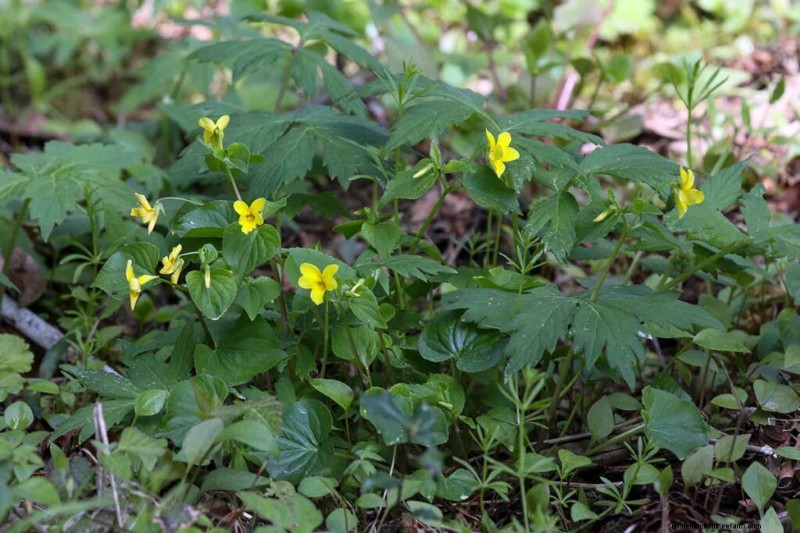
Photo by Kristine Lofgren.
All of the flowers are edible, regardless of the species. The leaves are also edible, but too many of them can cause stomach upset thanks to the quantity of saponins they contain.
The leaves are diuretic and have laxative qualities. Native Americans used the roots to induce vomiting (which is a good reason not to eat them).
Generally, look for small flowers with five petals over heart-shaped leaves. The leaves have a wintergreen flavor and the flowers are sweet.
The flowers are lovely candied, and if you’re looking for a good recipe, our sister site, Foodal has you covered.
39. Yarrow
Common yarrow (Achillea millefolium ) is a welcome sight in wildflower fields, but in the garden it’s not so beloved.
That’s because it has an extensive underground root system that enables it to evade your efforts at pulling it out of the ground.
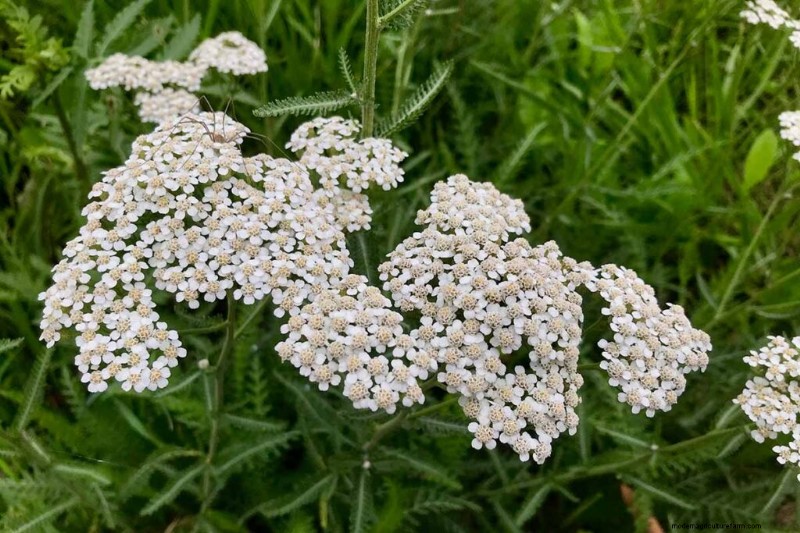
Oh well, at least the plant is edible, right? The leaves are used as a hops substitute or enjoyed raw in salads or to top sandwiches.
It tastes a bit like tarragon , so it’s best used in small amounts.
It grows just about anywhere except full shade. Look for a plant with feather-like leaves that spiral around the stem.
The flowers are white and look something like Queen Anne’s lace , but the foliage is entirely different. If you crush the leaves, they smell like tarragon.
Medicinally, yarrow is considered an invaluable herb to have around.
A tincture made from the plant can be used to stop bleeding, and it really works. No wonder the plant is sometimes called soldier’s woundwort. You can also use it to treat hemorrhoids.